
Buddha Dad
Or, WWTBD?

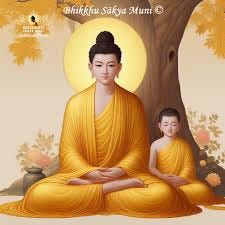
Ever wonder what it would have been like to have the Buddha for a dad? Or have you ever had that thought in the midst of a parental meltdown, “What would the Buddha do (WWTBD)?”. As the story goes, the Buddha was a father, albeit a bit absent for the first eight years or so. But man did he make up for lost time after that. It is suggested that the insight Siddhartha Gautama gained while away from home provided his son with the gift of a truly fulfilling life.
I spent several years in my twenties in lotus position, for days at a time in temples throughout Thailand, trying to find some sort of inner peace. I’ll never forget a statue at one of those temples in Chiang Mai, an image of the Buddha in his fasting stage, emaciated from years of just one grain of rice per day. I remember thinking how motivated he must’ve been to starve in the name of enlightenment.
But the Buddha would later realize that asceticism wasn’t actually the path he was meant to take. He would eventually discover a far less austere way, what was eventually called the Middle Way. He would return home to his wife and son to pass along the Four Noble Truths he had discovered along his journey.
I reflect on these truths often in my life as a dad. I think to myself, “WWTBD”?
Truth #1 as the Buddha articulated it, was that life is chalk full of suffering. He said it a little differently, but that was the gist. Some of my hardest times as a father are when I expect parenting to be easy, or peaceful, or worse…happy. Don’t get me wrong, I’m all for happy moments with my family, but I’ve learned to see happiness as a byproduct of embracing the role of parenting fully, rather than expecting happiness as some sort of right or privilege.
Life with a baby is sleepless. Thats truth. Chasing a toddler around the house is exhausting. Truth. Teenagers are filled with hormones and psychological complexity. No use arguing with that. Once we stop fighting that parenting is challenging, we can embrace the challenge and stop expecting it to be different than it is.
But I’m getting ahead of myself.
Truth #2 was about the cause of our suffering. The Buddha taught that although life is filled with unavoidable pain like sickness and death (see truth #1), the majority of our suffering is caused by our thinking about suffering, the stories we weave about life, and in particular wanting things to be different than they actually are. The Buddha called this craving and it is what Byron Katie called, “arguing with reality”.
When we had our first kiddo, I dreaded the sleep exhaustion as it accumulated each night. But if I really get honest and think back to that time, the dread was worse than the lack of sleep. Really. I spent so much time wishing things were different, longing for something that I didn’t have (sleep), that I wasn’t present to what was right in front of me. As I was lost in the story of being sleep deprived, I was depriving myself of life’s precious moments.
Truth #3, was a little more uplifting than the first two. Here, the Buddha suggested that there is a way out of all of this self-inflicted suffering. Once we understand the cause of our suffering (see truth #2), we can begin to divest from it a bit. If wanting things to be different is what causes so much grief, we can actually learn to accept what is, to embrace the challenges, or as Byron Katie says, to “Love What Is”.
When I was little, my family went to church every week. My brother and I could be kind of a restless in those hard wooden pews. We just wanted to be outside playing not inside praying. One Sunday, as we came out of mass, my dad shot us the look of shame. He leaned down and said sharply, “I can’t believe how squirmy you two were today.” Just moments later, my mom who hadn’t heard my dad’s admonition, looked at us with a big smile and said, “you two were just angelic today.” I felt like introducing the two of them to each other, “Squirmy, meet Angelic”.
Same exact situation, same kids, two very different experiences. One was resisting reality, the other loving it.
Truth #4 you can check out for yourself. The Buddha called it the Eightfold Path, and it was his prescription for working effectively with the mind. Far beyond the scope of this article, it suggested that with practice and discipline, we can all work to develop the very habits that lead to a more peaceful life.
What are you doing every day to cultivate the kind of attitude you want towards parenting? What are you practicing in the service of a more meaningful, fulfilling life? Take a look at how you spend your time, this is what you are investing in. What might you want to divest from? What do you want to reinvest in? Every moment is a vote.
Parenting can be hard (truth #1), as dads we can make it so much harder than it needs to be (truth #2), but there are ways to lean into and embrace fathering (truth #3), and it requires prioritizing our mental, emotional, relational, and physical wellbeing as a daily discipline (truth #4).
But don’t take the Buddha’s word for it, come join us in our next Fathering From the Heart cohort. Discover your own personal path to purposeful parenting and discover your own noble truths along the way.